



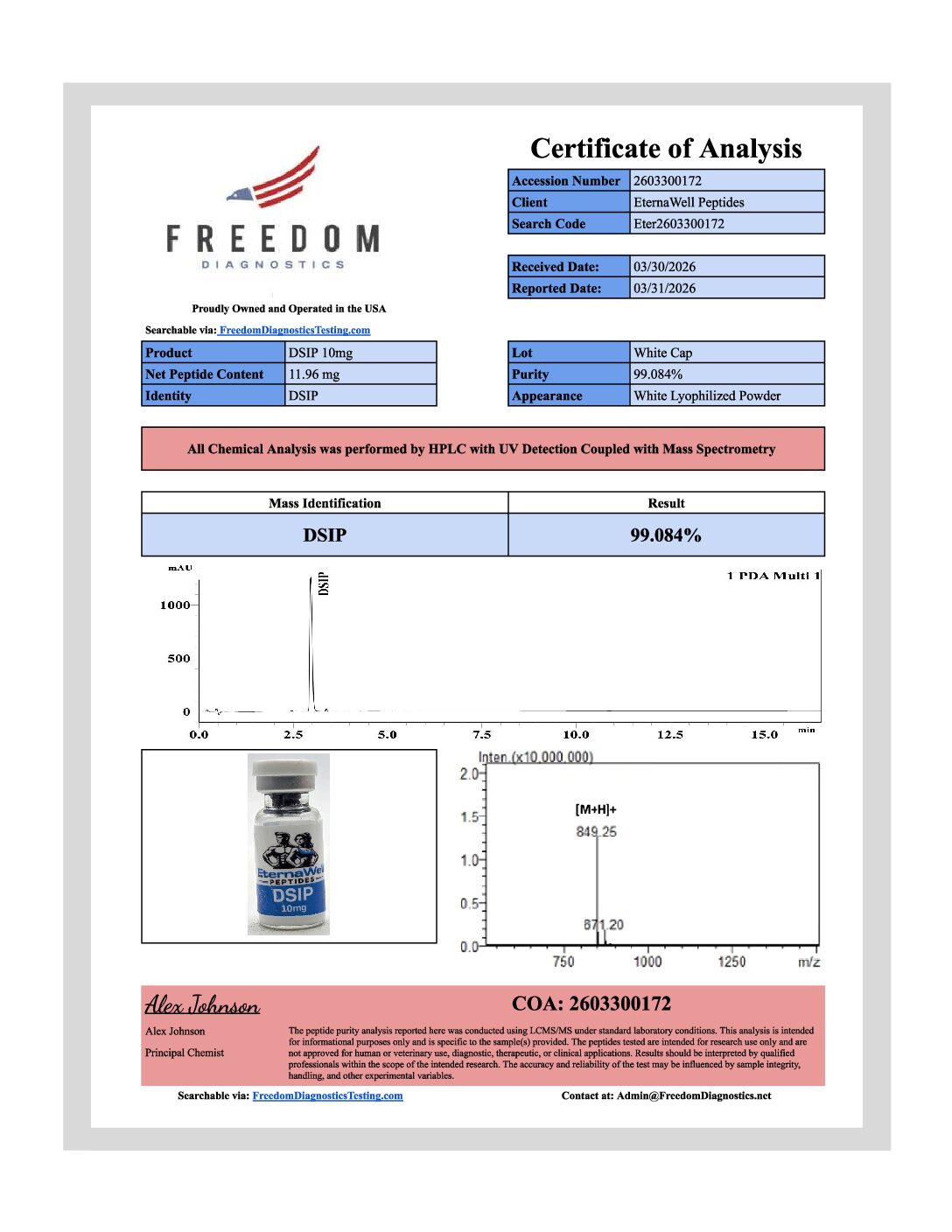

DSIP (Delta Sleep-Inducing Peptide) is a naturally occurring neuropeptide that has been studied in laboratory research for its potential role in regulating sleep architecture, neuroendocrine signaling, and stress-response pathways. First identified in studies examining sleep regulation, DSIP has been observed in association with several central nervous system processes related to circadian rhythm modulation and restorative sleep patterns. In experimental models, researchers investigate how DSIP-related signaling may interact with neurotransmitter systems and hormonal pathways that influence sleep cycles and neurological balance.
Within controlled laboratory environments, DSIP is frequently examined for its potential involvement in neuroendocrine regulation and hormone signaling dynamics. Research models have explored interactions between DSIP pathways and the release or modulation of hormones such as growth hormone, cortisol, and other endocrine regulators associated with stress and recovery mechanisms. These studies often focus on understanding how neuropeptides influence communication between the central nervous system and endocrine system, particularly in models designed to simulate disrupted circadian rhythms or physiological stress responses.
DSIP is also studied for its broader potential role in neurological resilience, stress adaptation, and cellular protection mechanisms within neural tissues. Experimental investigations may examine how DSIP-associated pathways influence neuronal signaling stability, oxidative stress responses, and the maintenance of neurological homeostasis under challenging physiological conditions. Because of its potential interactions with multiple neuroregulatory systems, DSIP continues to be of interest in research exploring sleep biology, neuropeptide signaling, and the complex regulatory networks that support central nervous system function.
Research use only. Not for human or veterinary use.




Reviews
There are no reviews yet.